Hey everyone, hope you are having an amazing day today. Today, I will show you a way to make a special dish, japanese chicken nanban. One of my favorites food recipes. This time, I am going to make it a bit tasty. This is gonna smell and look delicious.
Chicken nanban is an example of "yoshoku", Western style food that has been adapted to suit Japanese tastes. This succulent chicken dish originated in Miyazaki Prefecture in the far South of. This video will show you how to make Chicken Nanban. Fried chicken breast is dipped in sweet and source sauce and served with home made tartar sauce.
Japanese Chicken Nanban is one of the most well liked of current trending foods in the world. It’s simple, it’s quick, it tastes delicious. It is appreciated by millions every day. They’re nice and they look fantastic. Japanese Chicken Nanban is something that I’ve loved my entire life.
To get started with this particular recipe, we must prepare a few ingredients. You can cook japanese chicken nanban using 23 ingredients and 6 steps. Here is how you can achieve it.
The ingredients needed to make Japanese Chicken Nanban:
- Make ready 500 g Boneless chicken thighs
- Get 6 Tablespoons Bread flour
- Get 1 teaspoon shichimi togarashi (seven spice powder)
- Prepare Marinade ingredients
- Get 1 Whole egg
- Get 30 cc Rice wine
- Make ready 0.5 teaspoon Salt
- Prepare 0.5 teaspoon white pepper powder
- Get 1 teaspoon shichimi togarashi (seven spice powder) -optional
- Take Nanban sauce
- Take 4 Tablespoons Soy sauce
- Get 4 Tablespoons White vinegar
- Take 2 Tablespoons Mirin
- Prepare 1 teaspoon Caster sugar
- Make ready Tartare sauce
- Prepare 1 Boiled egg
- Get 2 Tablespoons Chopped onion
- Make ready 2 Tablespoons Chopped gherkin
- Make ready 2 Tablespoons Mayonnaise
- Prepare 1 teaspoon French mustard
- Make ready 1 teaspoon Honey
- Take 1 pinch Salt
- Take 1 pinch Black pepper
On its own, "nanban soba" (南蛮蕎麦) or simply "nanban" might be used, referring to the onions in the dish. #japanese food #teishoku #chicken nanban #fried chicken #contains meat. Chicken nanban udon is kake udon with chicken, shiitake mushrooms, spring onion, or other ingredients added. The dish is delicious because the taste of the chicken seeps into the broth and. Chicken nanban is fried chicken that's been briefly marinated in a sweet-sour-salty and slightly Quite a lot of popular Japanese bentos have deep fried items in them, but I usually to re-interpret the.
Steps to make Japanese Chicken Nanban:
- Put the chicken chunks into the marinade and mix well. Leave in the fridge for 30 minutes.
- Put all the ingredients for Nanban sauce into a sauce pan and bring it to boil. Then set it aside to cool.
- Put chopped onion in a bowl and add in a small pinch of sugar and salt. Marinate for 10 minutes and squeeze all the liquid out.
- Add all the ingredients for tartare sauce into a bowl and mix them well.
- Add in bread flour into the chicken bowl and let chicken chunks are coated with flour.
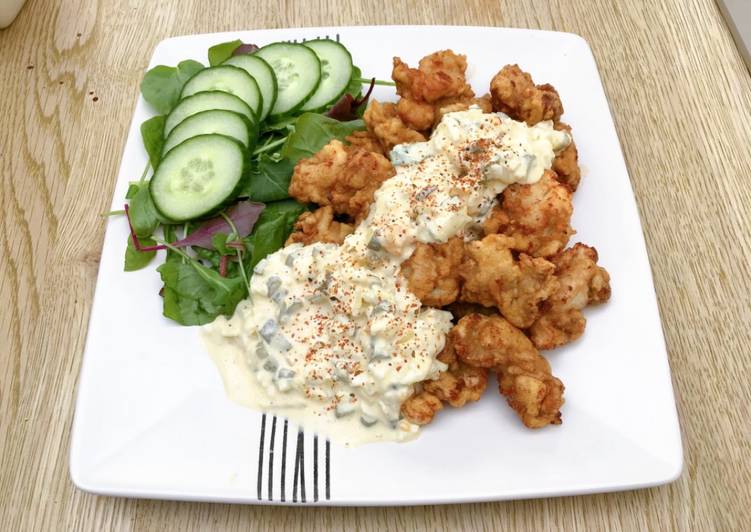
- Deep fry or pan fry the chicken chunks. Make sure they are all cooked and crispy. Dip all the chicken in the Nanban sauce and then place them on the serving plate. Pour the tartare sauce and sprinkle some shichimi togarashi (seven spice powder). Enjoy~
The dish is delicious because the taste of the chicken seeps into the broth and. Chicken nanban is fried chicken that's been briefly marinated in a sweet-sour-salty and slightly Quite a lot of popular Japanese bentos have deep fried items in them, but I usually to re-interpret the. Nanban sauce or vinegar is most commonly used for nanban dishes. For instance Chicken nanban is a dish that originated at a popular restaurant in Miyazaki prefecture in the southern island of. Chicken nanban is a fried chicken dish.
So that is going to wrap this up with this special food japanese chicken nanban recipe. Thank you very much for reading. I am confident you will make this at home. There’s gonna be more interesting food at home recipes coming up. Remember to bookmark this page on your browser, and share it to your loved ones, colleague and friends. Thank you for reading. Go on get cooking!