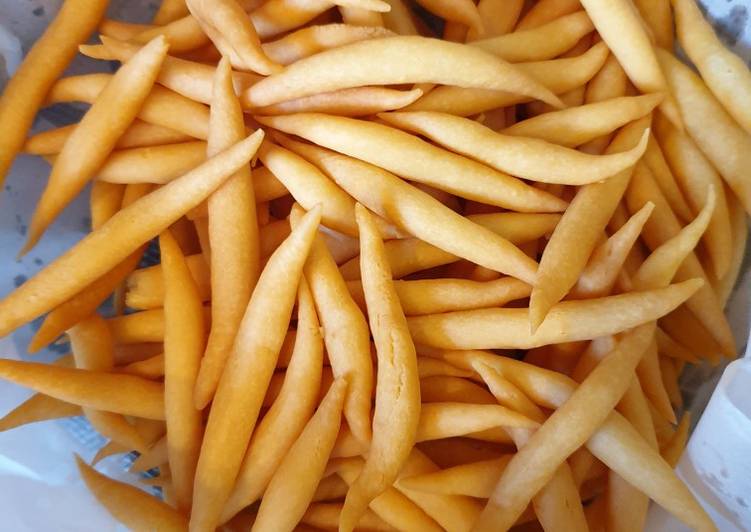
Hey everyone, it’s me, Dave, welcome to our recipe site. Today, I’m gonna show you how to make a distinctive dish, indonesian traditional cheese sticks (telor gabus). It is one of my favorites. This time, I am going to make it a little bit tasty. This is gonna smell and look delicious.
Indonesian traditional cheese sticks (Telor gabus) is one of the most popular of current trending meals in the world. It’s simple, it’s fast, it tastes delicious. It’s enjoyed by millions daily. Indonesian traditional cheese sticks (Telor gabus) is something which I’ve loved my whole life. They’re fine and they look fantastic.
Selamat datang & Selamat berjumpa lagi dengan Channel saya teman" Di video kali ini mau bikin olahan Jajanan Khas Lebaran hanya. Haaai di video kali ini aku mau share cara membuat Cheese Stick atau Telur Gabus yang super gampang dan siapun bisa buat asal ga males aja pas lagi. #sagukeju #telurgabus #cheesestick. Kaasstengels (// (listen)), Kastengel or kue keju is Dutch influenced-Indonesian cheese cookie in the form of sticks, commonly found in the Netherlands and Indonesia. The name describes its ingredients, shape and origin; kaas is the Dutch word for "cheese".
To begin with this particular recipe, we have to prepare a few components. You can have indonesian traditional cheese sticks (telor gabus) using 6 ingredients and 11 steps. Here is how you can achieve it.
The ingredients needed to make Indonesian traditional cheese sticks (Telor gabus):
- Take 200 g tapioca flour
- Make ready 50 g all-purpose flour
- Get 50 g butter
- Make ready 125 g grated cheddar cheese
- Take 2 eggs
- Make ready Oil to fry
In Indonesian snacks are called kudapan, makanan kecil (lit. "small food") or A traditional thick scorched rice cracker, made from cooked rice that stuck in the inner part of rice pot A folded rice pancake served in savoury whitish coconut milk-based soup. Lemang is a traditional food from Indonesian, Malaysian and Singapore. It is commonly filled with cooked green bean but new variety is filled with corn and cheese. Pukis is traditional kue from Indonesia and it modification of waffle.
Instructions to make Indonesian traditional cheese sticks (Telor gabus):
- Whisk the butter and eggs together or you can also use mixer
- Add the grated cheese and mix them until the texture becomes soft
- Then mix both flours together, and add quarter of it to the mixture, this time use your cleaned hand to mix
- Keep on adding the flour in batches until you get the right texture, where you can knead the dough without sticking on your hand
- Meanwhile, heat up your pan with low heat, add a lot of oil approx 300ml so that will cover all the sticks nicely
- While the oil is heating up, start making your sticks using your hand and immediately drop it to the oil one by one
- Don't add too many sticks, the sticks will float when it's half Cooked, so make sure there is enough space fro them to float and you can easily toss and turn
- Once they are floating, toss them to ensure they are fully cooked and fry them until colour change to golden
- Remove from oil once you get the colour you need, and place them on the wax paper until they cool down
- Do the same for the remaining dough
- Serve immediately or store them in a jar for whenever you want them. Just make sure that it's an air tight jars so the sticks remain crispy
It is commonly filled with cooked green bean but new variety is filled with corn and cheese. Pukis is traditional kue from Indonesia and it modification of waffle. It is street food made of egg, sugar, wheat flour and coconut. Cocok dinikmati sambil menonton TV bersama. Lihat juga resep Telur gabus keju enak lainnya.
So that is going to wrap it up for this exceptional food indonesian traditional cheese sticks (telor gabus) recipe. Thank you very much for reading. I am sure you can make this at home. There is gonna be more interesting food in home recipes coming up. Don’t forget to save this page on your browser, and share it to your family, colleague and friends. Thanks again for reading. Go on get cooking!